Rocklin neighborhood plumbing guide: common issues by area
A block-by-block look at the plumbing problems we actually get called for across Rocklin, from hard water scale to clay-soil sewer lines and slab leaks.
The most common plumbing issues in Rocklin neighborhoods are hard-water scale in fixtures and water heaters, root intrusion and settling in clay-soil sewer lines, and slab or under-slab leaks in homes built from the 1980s through the 2000s. Those three problems account for the majority of our service calls, but which one hits your house first depends heavily on where in Rocklin you live.
A Rocklin neighborhood plumbing guide is a block-by-block breakdown of the failures we actually see, not a generic list of plumbing problems. Rocklin sits on a mix of expansive clay soils, older copper and galvanized piping, and some of the hardest municipal water in Placer County - and each of those factors lands differently depending on your subdivision, your home's build year, and how close you are to a greenbelt or creek corridor.
Below we walk through what we find in the older central neighborhoods, the newer ridge and foothill communities, and the commercial corridors, plus the seasonal patterns that show up every winter and summer.
Why Rocklin plumbing problems cluster by neighborhood
Rocklin's plumbing problems cluster by neighborhood because three variables change street to street: the age of the piping, the soil under the slab, and the mineral content of the water feeding the house. A 1978 ranch near Downtown Rocklin and a 2018 build up near Whitney Ranch are running the same water, but the pipe materials, slab design, and landscaping irrigation load are completely different.
Soil matters more than most homeowners realize. Rocklin's expansive clay swells when it's wet and shrinks when it dries, and that movement is what cracks sewer laterals, shifts slabs, and opens joints. Homes on the flatter, older grid closer to the historic downtown tend to have shallower laterals in older clay that has already done most of its moving. Homes on graded hillsides and newer pads often have deeper fills, which settle unevenly for the first 10 to 15 years.
Water chemistry is the third variable. Rocklin's water supply runs hard - we routinely measure 10 to 16 grains per gallon depending on the source blend and the season. That's enough to scale up a tank-style water heater in three to five years and to pit faucet cartridges and shower valves well before their rated life.
If you want a baseline for how we approach the whole city, our plumbing rocklin CA service page covers the full range of what we handle, from a dripping hose bib to a full repipe.
What plumbing issues are common in Rocklin neighborhoods?
Common plumbing problems in Rocklin CA break down into four buckets: water-quality damage, drain and sewer blockages, pressure and leak failures, and water heater end-of-life. Here's how they show up in practice.
- Water-quality damage: scale on faucet aerators, white crust on shower heads, cloudy hot water, and shortened water heater life.
- Drain and sewer blockages: root intrusion at lateral joints, grease and soap scum buildup in kitchen lines, and slow main-line drains after heavy rain.
- Pressure and leak failures: pinhole leaks in older copper, failed angle stops under sinks, and slab leaks in homes with under-slab copper.
- Water heater end-of-life: sediment rumbling, rusty hot water, and tanks failing at the 8-to-12-year mark instead of the 12-to-15-year mark you'd see with softer water.
The order in which these hit your house usually follows the age of the home. Homes built before 1990 tend to see pipe and drain issues first. Homes built after 2000 tend to see water-quality and fixture issues first, because the piping is newer but the water is the same.
Which Rocklin areas have hard water problems?
Hard water problems in Rocklin are citywide, but they hit hardest in neighborhoods with older plumbing and no whole-house treatment - particularly the older central and downtown-adjacent streets, and any home still running original 1980s or 1990s fixtures.
We measure hardness in grains per gallon (gpg). Anything above 7 gpg is considered hard; Rocklin regularly runs 10 to 16 gpg. At that level, a tank water heater accumulates roughly a quarter-inch of sediment per year, which is why we see tanks fail early and why hot-water recovery slows noticeably by year four or five.
The practical fixes are straightforward. A properly sized water softener handles the scale problem at the source, and a whole-house filter handles the taste and chlorine side. If you're not ready for treatment, at minimum flush your water heater annually and clean faucet aerators every six months - you'll see the scale come out in flakes.
For homes dealing with heavy scale, we install and service water softener installation and repair rocklin CA systems sized to the home's actual hardness and daily gallon use, not a one-size-fits-all unit.
Do different Rocklin neighborhoods have different plumbing issues?
Yes - different Rocklin neighborhoods have measurably different plumbing issues, and the split usually falls along three lines: build era, elevation and soil, and proximity to greenbelts or creek corridors.
Older central Rocklin and downtown-adjacent streets
Homes built from the 1950s through the 1980s are where we find the most original galvanized and early copper piping. Galvanized steel corrodes from the inside out, which shows up as rusty water in the morning, dropping pressure at upstairs fixtures, and eventually pinhole leaks. Copper from that era is often fine, but it's prone to pinhole failures where the water is aggressive and the line runs hot.
These neighborhoods also have the oldest sewer laterals, many still clay tile or cast iron. Root intrusion at the joints is the number-one call we get here, especially on streets with mature sycamores and liquidambars.
Ridge and foothill subdivisions (Stanford Ranch, Whitney Ranch, and similar)
Newer builds from the late 1990s through the 2010s generally have PEX or copper supply lines and ABS or PVC drains, so pipe corrosion is rare. What we see instead is slab and foundation-related movement, irrigation-related pressure spikes, and water-quality damage to fixtures that were never designed for 14-gpg water.
These homes also tend to have higher static water pressure because they sit on graded pads with pressure-reducing valves that eventually fail. When a PRV sticks open, you'll see dripping relief valves, noisy pipes, and premature fixture failure.
Greenbelt and creek-adjacent properties
Homes backing onto open space, drainage channels, or the creek corridors see more root intrusion and more seasonal groundwater. Sewer laterals here are the highest-risk lines in the city, and we recommend a camera inspection every two to three years rather than waiting for a backup.
We do a lot of work in these areas, and we keep a dedicated page for residential plumbing rocklin CA that covers the full range of home systems we service.
Sewer and drain problems in Rocklin's clay soil
Sewer and drain problems in Rocklin are driven by clay soil movement and root intrusion, and they almost always start small - a slow drain here, a gurgle there - before they become a backup.
The typical failure sequence looks like this: a hairline crack or open joint lets roots in, roots grab the moisture and organic matter, the line narrows, and the first heavy rain pushes the blockage into a full backup. By the time you see water in the lowest floor drain, the line has usually been compromised for months.
We handle these three ways depending on what the camera shows:
- Hydro jetting for grease, scale, and soft root masses that haven't damaged the pipe.
- Sewer line repair for isolated cracks or joint failures that can be spot-fixed.
- Sewer line replacement for collapsed, bellied, or root-destroyed laterals where repair won't hold.
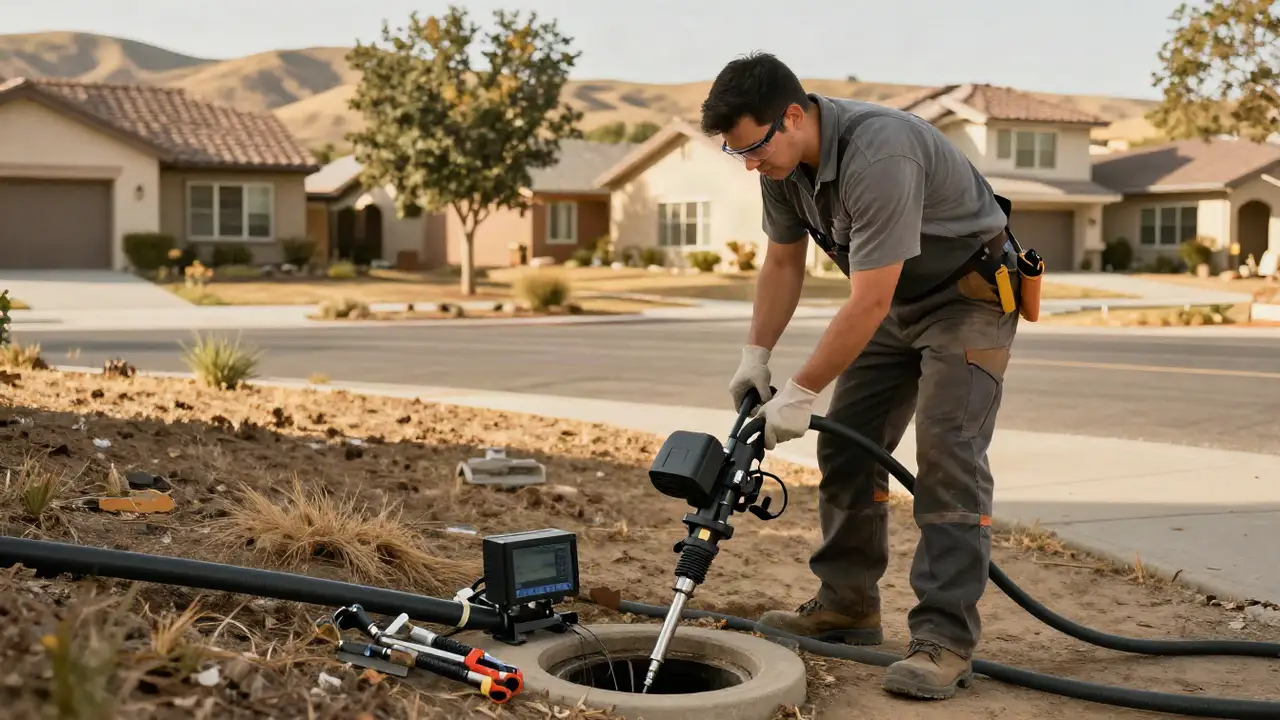
If your drains are slow and you've already tried the store-bought cleaner, the right next step is a camera inspection. We run a sewer camera inspection rocklin CA to see exactly what's in the line before we recommend anything - no guessing, no unnecessary digging.
Water heater and fixture wear across Rocklin
Water heaters and fixtures wear faster in Rocklin than in most of California because of the water chemistry, and the pattern is consistent enough that we can usually predict failure by build year and treatment status.
Tank water heaters in untreated Rocklin homes typically last 8 to 12 years. With a softener and annual flushing, we see them reach 12 to 15. The early warning signs are rumbling or popping sounds (sediment boiling under the burner), rusty or metallic-tasting hot water, and moisture at the base of the tank.
Fixtures fail on a similar curve. Faucet cartridges, shower valves, and toilet fill valves in hard-water homes often need replacement in five to seven years instead of the ten-plus you'd expect in a soft-water city. Tankless units need descaling every 12 to 18 months in Rocklin, versus every 24 months in softer-water areas.
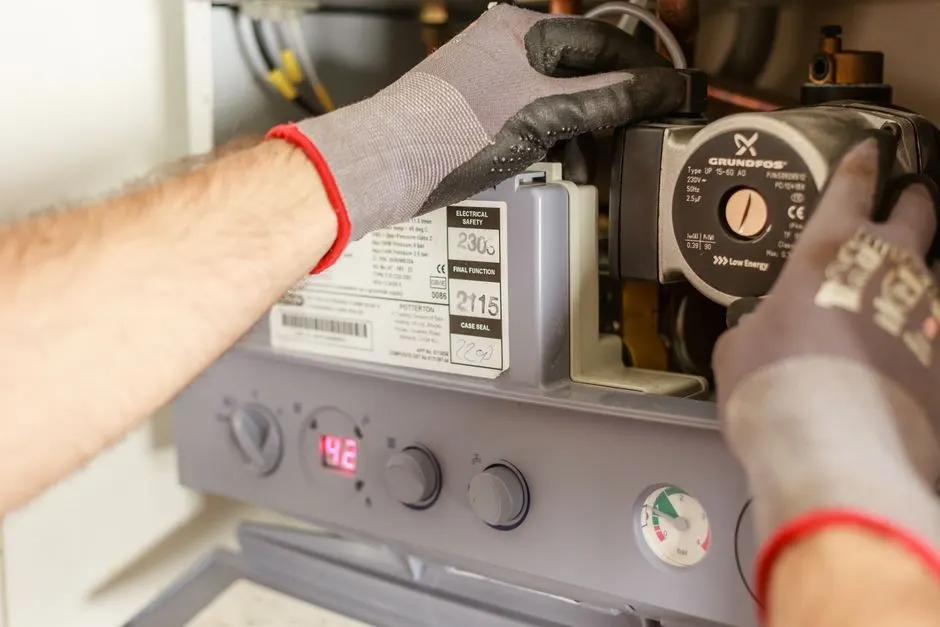
When a tank is at the end of its life, we handle both repair and replacement - you can see the full scope on our water heater repair rocklin CA page, including tankless service.
Common mistakes Rocklin homeowners make
Common mistakes Rocklin homeowners make usually fall into four categories, and each one turns a small repair into a bigger bill.
- Using chemical drain cleaner on a root-blocked line. It eats through the blockage temporarily, then the roots come back stronger. It also damages older cast iron and clay pipe.
- Ignoring a slow drain until it backs up. A slow drain is the cheapest problem you'll ever fix. A backup is the most expensive.
- Skipping the water heater flush. Fifteen minutes a year adds years to the tank. Skipping it is the single fastest way to shorten its life in Rocklin's water.
- Assuming a slab leak is a plumbing problem only. In Rocklin's clay, a slab leak is often a symptom of foundation movement, and fixing the pipe without addressing the movement means it happens again.
One more: don't assume a low-flow fixture is the problem when pressure drops. In newer Rocklin subdivisions, a failing pressure-reducing valve is the far more common cause.
When to call a professional
Call a professional when you see water where it shouldn't be, smell sewer gas, hear water running with everything off, or notice a pressure drop that affects more than one fixture. Those four signs point to problems that get worse, not better, on their own.
At Rocklin Granite Flow Plumbing, we find the leak or blockage, fix it, and test the line before we leave. We give you upfront pricing before we start, and we'll tell you honestly when a repair is the right call versus when replacement makes more sense.
If you're in an older central Rocklin neighborhood with original piping, or a newer subdivision with a failing PRV, we've seen your exact situation before. Call us and we'll get it sorted.
Frequently Asked Questions
What plumbing issues are common in Rocklin neighborhoods?
Hard-water scale in fixtures and water heaters, root intrusion in clay-soil sewer lines, pinhole leaks in older copper, and slab leaks in homes built from the 1980s through the 2000s. Water heaters in untreated Rocklin homes typically fail at 8 to 12 years because of sediment buildup.
Which Rocklin areas have hard water problems?
All of Rocklin runs hard, typically 10 to 16 grains per gallon, but the damage shows up fastest in older central and downtown-adjacent neighborhoods with original fixtures and no whole-house treatment. Homes with a softener see water heaters last 12 to 15 years instead of 8 to 12.
Do different Rocklin neighborhoods have different plumbing issues?
Yes. Older central Rocklin sees more galvanized pipe corrosion and clay-tile sewer root intrusion. Newer ridge and foothill subdivisions see more pressure-reducing valve failures and water-quality damage to fixtures. Greenbelt-adjacent homes see the most root intrusion and seasonal groundwater issues.
How often should I flush my water heater in Rocklin?
Once a year, every year. At 10 to 16 grains per gallon, Rocklin water deposits roughly a quarter-inch of sediment annually in a tank heater. Annual flushing adds three to four years of service life on average and keeps hot-water recovery fast.
How do I know if my Rocklin sewer line has roots in it?
Slow drains in multiple fixtures, gurgling toilets, and recurring backups after rain are the usual signs. The only way to confirm is a camera inspection. In greenbelt-adjacent Rocklin neighborhoods, we recommend inspecting every two to three years even without symptoms.
Get help with plumbing in Rocklin
Whether you're in an older central Rocklin home with original piping or a newer subdivision with a failing PRV, we know the neighborhood patterns and we can fix what's actually wrong. Call Rocklin Granite Flow Plumbing at (279) 790-0111 and we'll get your water running right.